About This Program
Income Restricted Apartments matches Texas renters to LIHTC communities - sometimes called tax credit apartments - that charge rent below market. Qualification depends on your household income, household size, and metro. Our licensed team (TREC #679806) tells you in about five minutes whether you qualify, then matches you to communities that are actually accepting applications.
How the Tax Credit Apartment Program Works in Texas
LIHTC (Low-Income Housing Tax Credit) is the federal program that funds most new affordable apartments built in the last 30 years. Projects receive either competitive 9% credits or bond-paired 4% credits. IRS Section 42 gives the property owner a tax credit each year for keeping rents affordable, and the property signs a Land Use Restriction Agreement (LURA) locking those rent caps in for decades. The Texas Department of Housing and Community Affairs (TDHCA) administers Texas allocations through the qualified allocation plan (QAP), while TSAHC has issued over $600 million in multifamily tax-exempt bonds. Texas H.B. 1058 created an additional state-level credit with first credits usable in 2026.
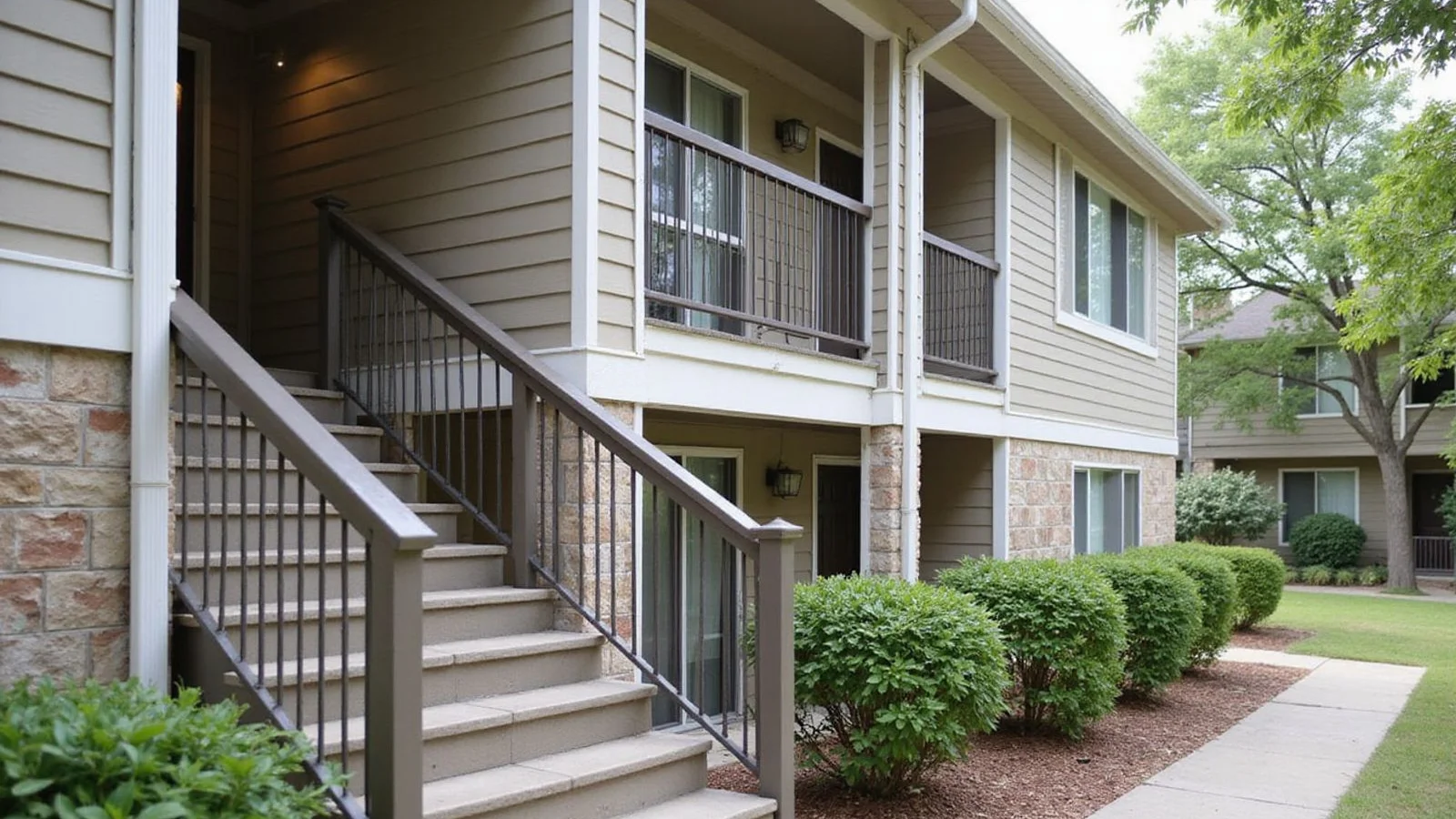
In practical terms, that means a LIHTC apartment - whether a garden-style complex, mid-rise community, or townhome development - charges rent below what the market would otherwise pay. Your rent is set by the AMI tier of your unit, not by your personal income.
Which AMI Tier Sets Your Rent?
LIHTC units are set aside at different Area Median Income (AMI) tiers. Each tier has an income cap and a rent cap:
- 30% AMI: Deepest affordability. Rent is a very small fraction of median income for your metro and household size.
- 50% AMI: A common tier for family and general LIHTC.
- 60% AMI: The most common LIHTC tier. Balances affordability with property financing needs.
- 80% AMI: Workforce housing tier. Useful for renters priced out of market rate but earning too much for deeper subsidies.
A single property often mixes tiers. You might live in a 60% unit next door to a 50% neighbor, in the same building with the same finishes.
What the Rent Cap Means for Your Monthly Cost
The rent cap is calculated as 30% of the tier’s imputed income, minus a utility allowance for utilities the tenant pays. So the “gross rent” (rent plus utility allowance) can’t exceed 30% of, say, 60% of the AMI for the assumed household size for that bedroom count.
That’s why two 2-bedroom units in the same building can have different rents: one might be a 50% unit, the other a 60% unit. The tier sets the cap.
How We Match You to Tax Credit Apartments
The Income Restricted Apartments team works with LIHTC communities across Austin, San Antonio, Houston, Dallas, and Fort Worth. When you contact us:
- We check your income against current TDHCA/HUD limits for your metro and household size, and tell you which AMI tiers you fit.
- We identify LIHTC communities that are actually accepting applications right now, not closed waitlists dressed up as “available”.
- We pre-screen your credit, background, and rental history against each community’s tenant selection plan before you spend a non-refundable application fee (typically $50-$150 per adult as of 2026).
- We coordinate multiple applications so you’re not stuck waiting on one property.
- We rebate your application fee when you’re approved and sign a lease at a LIHTC community through our service.
Renters We Help Navigate LIHTC
- First-time affordable renters, unsure whether income qualifies at 50% vs 60%.
- Voucher holders using a Housing Choice Voucher (from HACA, SAHA, Houston Housing Authority, DHA, or FWHA) at a LIHTC property - often a strong combination.
- Students navigating the IRS Section 42 full-time student rule and its exceptions.
- Fixed-income seniors meeting the AMI cap but running into property income minimums.
- Renters with past credit or eviction issues who need properties with more flexible screening.
What Happens When Your Income Changes
Once you move in, your income is re-certified annually. LIHTC rent stays capped by tier, so a raise doesn’t automatically raise your rent. If your household income rises above 140% of the applicable limit, the “next available unit rule” may apply, meaning the community rents the next comparable unit to a new income-qualified household. Most tenants stay put.
How Utility Allowances Lower Your Rent
If you pay for electricity, gas, or water, the property subtracts a utility allowance from the maximum gross rent. That allowance is estimated from local utility data. So the net rent you see on your lease can be lower than the raw “60% AMI rent” number.
Ask us for the current 2026 utility allowance figures for any specific community and we’ll give you the real all-in monthly cost.
How Our Free Locator Compares
| Feature | Searching on Your Own | Income Restricted Apartments |
|---|---|---|
| Cost to you | $50-$150 per application, per adult | Free - plus fee rebate on approval |
| Pre-screening | Apply first, find out after paying | Pre-screened before you spend a dime |
| Metro coverage | One property or listing site at a time | All 5 Texas metros from one team |
| Waitlist tracking | You call each property yourself | Coordinated across multiple communities |
| Licensing | Most are unlicensed directories | TX Real Estate License #679806 |
| Language support | English only (most sites) | Bilingual English and Spanish |
Related Programs
If a straight LIHTC unit isn’t the best fit, we can also help you with:
- Section 8 Voucher Apartments: if you already hold or expect a Housing Choice Voucher
- Public Housing: PHA-owned units where rent is set as a share of your income
- Senior Income Restricted Housing: age-qualified 55+ or 62+ affordable communities
Start with the free 5-minute intake and we’ll narrow the path.